Say Cheese
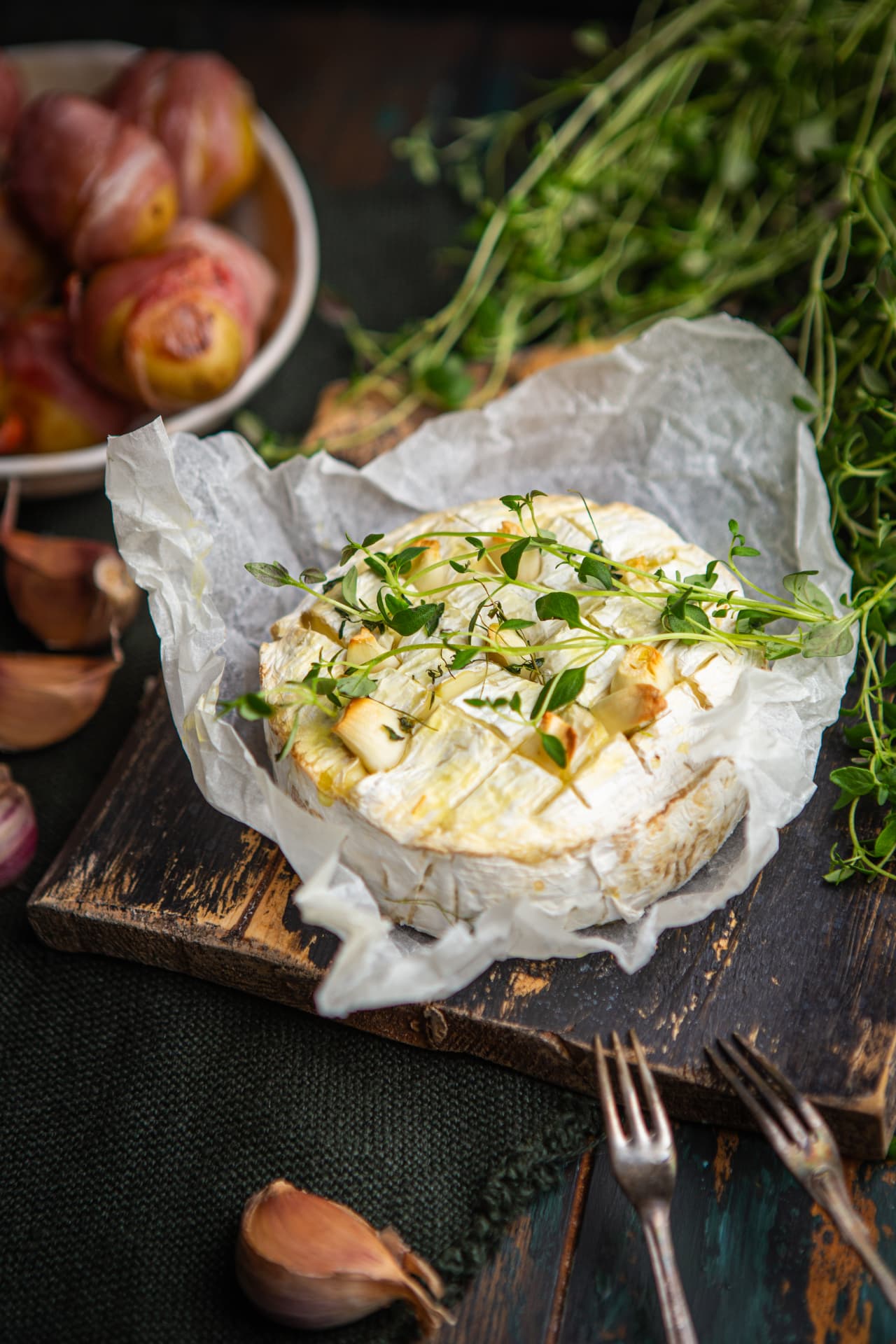
Baked Camembert
Rate this recipe
I came across this cheese with a rather unusual name while listening to my osteopath, a well-versed British lady in many respects. She wholeheartedly recommended trying this cheese. Intrigued, I delved into the history and embarked on a search. I found it surprisingly easily... and was genuinely taken aback by what I found. You know how it goes: sometimes the experience lives up to the first impression, and other times it's sadly lacking. Take buses for example. I'm still amazed by London's double-deckers. The whole experience of these vibrant red buses is simply exhilarating, especially from the front seats on the upper deck. The bus manoeuvres wildly on narrow streets, leaning on turns, defying the laws of physics, brushing past branches and nearly colliding with poles. The intensity of the sensations: a solid 9 out of 10. With this cheese, the expectation was of a strong, pungent smell that should permeate from a mile away, overpowering everything else in the fridge. But it turned out not to be the case. The taste is extraordinary, elegant, not overpowering and with a hint of earthiness. Modest and more subdued than Camembert perhaps. And the aroma is unassuming. A modest 4 out of 10. Stinking Bishop was named after a colourful character named Bishop, a farmer from the mid-19th century. He was quite the drinker with a complex personality. Legend has it he once fired a shot at a teapot on the stove because it was getting on his nerves; hence the prefix "stinking" which is more of a playful moniker meaning "unpleasant" rather than indicating smelliness. Nevertheless, if I had to choose, I'd definitely opt for Camembert. It packs a more robust punch, with age and ripeness adding sharpness and nobility. I simply adore it, especially baked.
Ingredients
- 1 Camembert wheel
- 4–5 cloves of garlic
- A few sprigs of fresh thyme
- 500 g new potatoes
- 8 bacon rashers
Cook mode
Keep the screen awake while you cook.
Method
- 1Boil the potatoes in their skins until tender. Drain and leave them to cool.
- 2Place the Camembert in a small baking dish and score it with criss-cross markings. Fill the cheese with garlic and thyme. Bake for 20 minutes at 180°C.
- 3Wrap the potato slices in bacon and fry them on a griddle pan on both sides.
- 4Once the Camembert is baked, dip the bacon-wrapped potatoes into the melted cheese.
How long to bake a camembert, and at what temperature
A whole camembert goes into a 180–200°C oven for about 20 minutes — 15 if it is small and very ripe, 25 if it came straight from the fridge. It is ready when the middle wobbles under a fingertip and a spoon sinks through the crust without resistance.
Keep it in its wooden box (lid off, paper removed) or in a small dish that fits it snugly, so the cheese cannot escape. Score the top in a cross or a lattice, push in slivers of garlic and sprigs of rosemary or thyme, and spoon over a little white wine or honey before it goes in.
Do not bake it twice and do not overshoot the time: overheated camembert splits into oil and rubber. Serve it the moment it comes out, with toasted baguette, boiled new potatoes, grapes, walnuts and a spoonful of fig or onion jam.
Baked camembert questions people ask
- How long do you bake a camembert?
- About 20 minutes at 180–200°C. Fridge-cold cheese needs closer to 25 minutes, a small ripe one 15.
- Do you take the camembert out of the box?
- No — keep the wooden base, remove the lid and any paper, and put the box on a tray. If the box is flimsy, use a small ovenproof dish of the same size.
- Do you remove the rind?
- No. The rind is what holds the melted cheese in. Just score the top so it opens.
- What do you dip into it?
- Toasted baguette or sourdough, breadsticks, boiled new potatoes, apple and pear slices, grapes and blanched vegetables.


